Showing posts with label brain. Show all posts

Monday, January 08, 2007

Brain and shopping

This Is Your Brain on Shopping -- An fMRI study determines where the brain appraises products and evaluates prices:

"Researchers discovered that when the product first flashed on the screen it activated the nucleus accumbens, a section near the middle of the brain that has been implicated in the brain's reward center, effectively appraising the item. When the price appeared, the scientists noticed activity in the mesial prefrontal cortex, a region of the brain known for higher executive functions. Its activity seemed to vary according to the difference between what someone would pay for an item and its actual cost, as if in error adjustment. Finally, the response of the insula (a lateral section of the brain's cortex known to activate during responses to negative stimuli) depended on the purchasing decision--activity there increased when a participant nixed a purchase. 'What we're looking at is not so much the brain's reaction to products and prices as a person's subjective reaction to the products and prices,' Knutson says. 'Is the product preferable? And is the price too much?'"


Interesting finding. However how much we find it too expensive to spend on one thing is not absolute and subjective to external influence.

I remember when I heard how much my friend had to pay on her apartment, I think it's outrage to pay so much for so little space. However, after I seriously look into the real estate market in Taipei, I realized the average prices might be just about that. So I stopped raising my eye brow when I hear the price I might need to pay for a new apartment in a building with elevator in Taipei city. I wonder whether my insula cortex is less activated now then before when I am consider how much mortgage we have to pay every month.

There must be somewhere that really important about how we change our synaptic connections for buying!! Well, if we can find it out, maybe we can exercise it to ease the pain when we can't afford what we dream for and live on.

Saturday, December 16, 2006

How more are you aware of your self? Your brain might tell

Neural systems supporting interoceptive awareness

How much are you aware of yourself?

When I start doing meditation, I often sense my body moving along my pulses. I could even see my leg moving with my heart beat when I am just merely siting with my leg cross. When I tie my hair back, I can feel it straining my head causing headache.

Even without doing any formal psychological test, I know I am a sensitive person. I can sense my mood changing with the amount of sun light. I know I tend to be moody when it's a gloomy day. No matter how hard I try, it's just hard to stay positive all the time.

I am always wondering what I did wrong to make me so sensitive to the external world. Can't I just be like those who don't care other people's responses, those who are so sure about themselves?

It turns out that I might have 'something' in my brain which makes me more 'aware' of myself. Researchers in the Institute of Neurology of University College London had discovered people who have bigger right anterior opercular region and anterior insula / OFC region can have better sense of their heart beat. (details refer to the original research) They also find positive correlation between the Hamilton anxiety scale and heart beat detection task.

What's the relation between senses of physical state and emotion experiences? It is a long standing theory proposed by William James and Carl Lange. It's called James-Lange theory of emotions. Briefly speaking, the theory suggests that our experience of emotion arises from our perception of body responses to external emotive stimuli.

This research is supportive to the James-Lange theory of emotion. It also extends its inference to the "personal emotional tendency". One can't help thinking that maybe we just can't get away the hardware structure of our brain.

There are some questions I would like to ask though:

1. The physical responses related to emotion are not only heart beats but also other responses. For people who are more aware of their heart beats, are they also more aware of other physical responses?
2. In the experiment, there's no emotional cues. Subjects are only asked to attend to their own heart beats. Will there be differences when emotional stimuli with different valence have different activation in the associate areas?
3. However how much is it determined innately? Are those areas developed after social interaction? What's the nature of neural plasticity in those areas?

Below is the abstract of the research

Influential theories of human emotion argue that subjective feeling states involve representation of bodily responses elicited by emotional events. Within this framework, individual differences in intensity of emotional experience reflect variation in sensitivity to internal bodily responses. We measured regional brain activity by functional magnetic resonance imaging (fMRI) during an interoceptive task wherein subjects judged the timing of their own heartbeats. We observed enhanced activity in insula, somatomotor and cingulate cortices. In right anterior insular/opercular cortex, neural activity predicted subjects' accuracy in the heartbeat detection task. Furthermore, local gray matter volume in the same region correlated with both interoceptive accuracy and subjective ratings of visceral awareness. Indices of negative emotional experience correlated with interoceptive accuracy across subjects. These findings indicate that right anterior insula supports a representation of visceral responses accessible to awareness, providing a substrate for subjective feeling states.

Monday, December 11, 2006

Self-destruction amygdala & Autism

News from nature: A hyperactive amygdala may cause its own self-destruction.

Madison 大學,Richard Davidson的研究團隊最近發表一項研究結果,表示自閉症患者的杏仁核較非自閉症患者小。杏仁核一向被稱為恐懼中樞,因為它在人類的恐懼情緒反應中扮演重要的角色。Autism的研究者發現患者在辨視人臉的情緒反應上有障礙,其中杏仁核的功能有關鍵性角色。

這個研究進一步地證實了一個假設,當腦部的一些功能過度工作(overworked),它會攻擊自己的細胞。

研究發現,杏仁核萎縮的程度與自閉症兒童罹患該病病的時間長度相關,而杏仁核萎縮的程度也與該病症的嚴重性有正向相關。

The results are consistent with the theory that a hyper-excitable amygdala in young autistic children may result in cell death and the shrinking of this part of the brain....


Research paper: Nacewicz BM, Dalton KM, Johnstone T, Long MT, McAuliff EM, Oakes TR, Alexander AL, Davidson RJ. Amygdala volume and nonverbal social impairment in adolescent and adult males with autism. Arch Gen Psychiatry. 2006 Dec;63(12):1417-28.

Thursday, July 27, 2006

新科學裏的哲學問題-神經研究與道德問題

最近認真閱讀神經認知相關的網路文章或是觀看相關的webcast,時常造訪英國的dana foundation。Dana foundation的成立主要是對一般大眾傳遞腦部研究的一些成果與重要的議題。基金會時常邀請著名的學者進行現場演講或是討論,讓一般大眾能有機會與這些平時關在研究室裏的學者有直接對話的機會,一般民眾更能直接了解一些具有爭議性的議題。透過網路,基金會舉辦的這些座談傳達到更多其它的角落裏。

最近我特別注意到的是基金會網站裏許多關於腦部研究蓬勃發展之後衍生的道德問題的討論,每一次的pannel discussion後我們看到的不是一個已被回答的問題,而是在討論裏被丟出來更多的問題。

因為腦內造影技術的發達,我們幾乎每天都可以看到新的研究發現轉載在網路新聞裏,而且多以聳動的文字作標題,例如「多工傷害學習」或是「拒絕會啟動腦部危險行為機制」、「自閉症男性患者的腦部情緒神經較少」等。

在今年七月的Times Online 裏(註1)的文章裏提到1992年時美國一位男性跟妻子爭執之後,將她殺害並從十二樓丟下,他的辨護律師提出腦部掃描的證據證明被告的腦部腫瘤造成他無法控制他的衝動行為而求輕量刑。三年後另一個案例是某個慈善機構的經理挪用公款,辯護律師用腦部磁核造影證明他在犯行期間,腦部逐漸痿縮,最後檢查官同意求處較少的刑期。

2003年Dana foundation舉行的神經道德座談(註2)裏提到,美國75%的兒童藥物沒有經過兒童臨床研究證實它的療效或影響,甚至是Ritalin(治療ADHD,注意力不足過動症的藥物),也沒有臨床實驗結果證明它的效果(現在可能已有研究成果),更不用提到關於學齡前兒童服用Ritalin後長期的追踪研究。2003年美國才開始研究Ritalin對發育中的腦部的後續影響。

2005年6月Dana foundation關於神經道德的討論(註3)裏,倫敦政經學院社會學教授Nikolas Rose指出一直到五年前,美國使用了全世界95%治療ADHD的藥物,而在義大利,這個疾病在當時的罹患率卻是未知,表示社會認知環境影響到對某些疾病的認定。這個不僅是道德的問題,而是政治、社會、甚至是生物經濟學的問題。(在座談裏他甚至使用「共同製造的流行病」來形容ADHD的例子)

在相同的坐談裏,牛津大學神經學教授Paul Matthews說道,在這個時間點裏,大腦對我們來說還是「無法預測」的。「心智起源於腦裏神經的作用」,負責任的人會說這樣的說法仍是一個「假設」,因為在任何的狀況下,我們都不能直接證明這個事實。我們可以預測一個突觸的行為反應,但一毫米平方的腦可以有十萬多的腦神經元,每個神經元又有一萬到二十萬的突觸連結進來,形成非常複雜的系統,任何一個參數的改變造成的結果在目前是遠超過我們能預測的範疇之外,所以我們需要一個完全不同的思考架構,來探討「預測」的問題,但我們還離這個目標很遠。

Dr. Rose並提到,神經認知研究與腦部研究的道德問題並不是一個離我們尚遠的問題,現在就有很多需要被探討的問題,譬如孩童使用Ritalin藥物的問題、強制病人服用精神藥物、憂鬱症的藥物治療界定日漸模糊的問題,或是焦慮失常(anxiety disorder)的新興市場的問題,這些議題在當下都應該被充份探討。

關於大腦研究還有很多其它的道德問題需要在學術與大眾間充份討論。2005年底美國有一個案例是使用充滿爭議的brain fingerprinting(註4)技術證明死刑犯對當時的重要細節並不記得,被告希望能因此免除死刑。目前這個結果並不被陪審團採用。所以我們將面對的問題幾個明顯的問題範疇:

一、腦部研究的成果在詮釋與應用上的問題。
二、治療或是「優化」的問題:例如,在什麼樣的情形下我們可以「操弄」腦部的反應?以著名的帕金森氏症為例,目前有一些方法是以腦部刺激來減輕它的症狀。那麼我們可以服用藥物來增加我們的記憶嗎?如果可能的話,我可以在明天考試前,吃下一片帶有增強記憶功能的麵包(想起小叮當的情節了嗎?)然後去考試嗎?或者是我可以把它當成保健藥物,每天服用嗎?如果有讓人變聰明的藥物(假設神經研究一直發展下去,這一天就會來臨的話),那服用這樣的藥物有道德問題嗎?
三、還有正常與不正常的界線問題。

這些問題其實都需要許多在科學之外的討論與釐清,在我們還沒有真正科學實事之前,我們就需要哲學思考來填補這個空缺,直到科學進一步地實證出我們的哲學推論為止。但到那時之前,讓我們再重覆一下Paul Matthews的那句話:「到目前為止,心智起源於腦裏神經的作用,都還只能算是假設。」

相關連結

註1 A head for trouble 
註2 Dana foundaion podcast in 2003 about neuroethics
註3 Dana foundation webcast in 2005
PBS 上關於Brain fingerprinting 介紹
Nikolas Rose: http://www.lse.ac.uk/people/n.rose@lse.ac.uk/
Paul Matthews: http://www.seh.ox.ac.uk/index.cfm?do=viewStaff&personID=41

Tuesday, July 04, 2006

All In The Mind - 24 June 2006 - Early childhood and the developing brain

澳洲廣播電台ABC有一系列關於心理學與神經科學的廣播節目。在網站上不旦有mp3可以下載,還有訪談稿提供該節目的訪談細節,是很不錯的資源。

七月二十四日的節目談到在嬰幼兒發展早期照顧者與嬰幼兒互動對嬰幼兒發展的影響。

節目中的主談者Dan Siegel認為,三歲以前的額葉發展提供了一些重要社會功能的基礎,譬如親密關係、同理等。在這個時期裏,嬰幼兒與照顧者的互動扮演了十分關鍵的角色。訪談稿摘譯如下:

人腦裏有數億神經元,在出生時這些神經元之間彼此的連結十分不成熟,在發展的過程中,個體的經驗開始促進神經元觸發而進而產生連結。

在一般狀況下,當嬰兒哭的時候,他的哭聲會被聽見,所以他的基本需求能得到滿足。這樣的經驗使得嬰兒的腦部發展產生如此的連結,於是發展出一個一致的腦部結構組織:當他向外溝通他的內心狀態時,會有相對的反應,所以他能得到需求上的滿足... 而大腦的組織會有非常有整體性。

當幼兒向外溝通他的內在需求時得不到反應時,他的腦部學習到的是,不管我內在需求是什麼,(向外溝通後)我還是不會得到我所需要的東西,因為外在世界的其它人無法了解我需要的是什麼。幼兒會學習到獨自存在,不向外要求,如果這樣的情形不斷發生,則最終甚至會和自我的身體和情緒經驗疏離。

孤兒院裏的孩子常是兩個護士照顧200個幼兒,所以幼兒的需求常常被忽略。Siegel提到如果一再地被忽略,幼兒無法從外在得到情緒的安撫,他們就會發展出自己的方式來安撫情緒,譬如說,咬自己、搖晃,想辦法對自己提供不同的刺激以分散自己的內在需求的注意。當這樣的情形維持數年之後,這些幻兒的腦部就愈發定形,對經驗的反應就愈來愈少,到了六、七歲時,那些從沒有任何親密關係的孩子很難跟其它人發展親密關係。

目前我們知識所及是在出生後十八到二十四個月時,大腦的額葉發展同理及自我調理(self-regulation)功能,如安撫自己的情緒、透過自言自語來看自己的想法,這些都從親密關係發展而來,二歲半到三歲時額葉的發展已經到一個幼兒可以去探索世界,較多社會互動的程度。所以要改變可能要在三歲以前。

但Siegel也提到人腦神經在成長後再生與重新連結的能力已是被廣泛證明的事實,所以透過檢驗自己的生命與記憶,我們可以再重建我們生命的意義。

We now know that definitively. So I believe very strongly that adults can use their minds to actually examine their lives and examine their own memory systems to make sense of their lives and then alter the way their brains function, so they can actually free themselves up from what used to be a prison of the past.


Tags:

Thursday, June 15, 2006

閱讀快樂-Happiness: The Science Behind Your Smile

自然期刊關於快樂的科學著作上的一句有趣的說法:關於快樂的科學研究的書啊... 就像在等公車一樣,你等得很久它不來,一來就來好幾台(顯然國內外皆同啊)。2005年出了好幾本關於快樂的科學的書(其實2006年還有哈佛的Danile Gilbert出的 Stumbling on Happiness),其中一本是New catstle的心理學家Daniel Nettle(I 得了蕁麻疹,nettle rash 之後的第三天,我收到Amazon寄來的Nettle的書,真巧)所著--Happiness: The Science Behind Your Smile.

這本書其實不長,我花了一個早上囫圇吞棗地把它看完.。和「不斷幸福論」相比,Nettle的書偏向以演化的觀點來解釋快樂的機制,且討論的方式也較專注在幾個議題上。

一、快樂的定義:他把快樂分成三種,第一層次的快樂,指的是較短暫的情緒,例如joy、pleasure;第二層次的快樂是對情緒的判斷,譬如幸福或是滿足,通常和認知判斷有關係,也有較長的時間面向;第三層次是生活品質,和人生的圓滿,個人的完成有關。第一層次與第二層次的快樂較容易「測量」,第三層次的快樂較不容易被測量。

二、人們一般來說是快樂的。他舉了英國對某一個年齡層的群眾作的長達數十年的研究資料(National Child Development Study)發現這些研究對象在一到十的量表上,陳述自己快樂的程度在五以下(11,269的受試者中的90%)。他也列出跨國的研究指數,包括許多發展中國家,例如印度的6.21、中國的7.05(甚至高過日本的6.53)。(這些研究主要是由伊利諾大學的ED Diener所發表)當然我們需要了解這些研究實施方法與背景資料)

三、Hedonic Treadmill理論(原由Brickman及Campell提出),追尋終極的快樂就像是在跑跑步機一樣。因為「適應」的關係,我們以為我們得到的快樂會持久,但過一陣子之後我們會回到一個恒常的狀態。就演化的角度來看,我們會因此而追尋「快樂」,這個機制可能會讓我們持續競爭,以達到繁演的目的。

四、經濟學家Robert Frank把快樂的來源分成兩種,一種是positional goods,一種是non-positional goods。金錢、汽車、社會地位是positional goods,健康、快樂、自由是non-positional goods,兩者主要的差異是這些「物品」的價值是否需要與其它人比較來顯現。Frank認為這個心理機制是演化的遺跡,繁演的成功和相對狀況有關而非決對的健康狀態。(這點在高度社會化的靈長類尤其明顯。有較高社會地位的雄性有較多的交配機會)。但這個演化結果讓我們不斷追求positional goods,也不斷被趕上,迫使我們必須再繼續不停向前。

五、天生快樂:人格特質在人們能不能快樂上扮演重要角色。神經質的程度(Neuroticism)和內外向跟快不快樂有很大的關係。較神經質的人較不容易快樂。

最近的研究發現一個叫作5HTT(這裏有一篇有趣的文章:所以快樂與長短有關?)的基因和血清素的系統建造有關。這個基因有兩種型式,長型與短型。有長型5HTT的人和兩個短型的人相較,似乎平均上較不神經質(嚴謹來說是在Neuroticism量表上分數較低)。

不過Nettle舉維根斯坦作例子,說明如果用第一層和第二層快樂來看維根斯坦的話,他可能活了一輩子不快樂的生活,但是從第三層次來看,他可能是快樂的。據說維根斯坦在死前要他的房東跟世人說,「Tell them I had a wonderful life」。Nettle也政治正確地補充說雖然似乎人格特質在我們能不能快樂上扮演重要角色,卻不是不能改變的,所以我們可以透過許多認知行為治療及靜觀認知療法(Mindfulness-based cognitve therapy)來變得快樂。(如果這是我們要追求的東西的話...)

六、想要與喜歡的不同:Nettle舉了許多精彩的神經行為研究來說明想要與喜歡的不同。有一個老鼠行為的研究,讓老鼠按bar時產生電流刺激牠的lateral hypothalamus(海馬迴),研究者發現老鼠像上癮般地不停地去按bar來產生刺激電流。而當海馬迴受到刺激時,老鼠就會一直吃東西。這個時候如果你給牠吃的東西是不好吃時,牠還是不停地吃(好可憐的老鼠)。控制欲望(wanting)的機制和依伏神經核(伏隔核)(nucleus accumbens) 多巴胺系統(dopamine system)有關。而腦內鴉片(opioid)和愉悅(pleasure)較有關。不過多巴胺系統與腦內鴉片系統彼此亦有相連,所以通常想要的東西和喜歡的東西會是相同的,但並不是總是相同。另外血清素(serotonin)在我們的快樂系統中扮演著另外一種角色,可能是調結我們正想與負向的情緒。

七、演化呀演化。為什麼恐懼與快樂的機制這麼不同呢?Nettle說這是獵豹與瞪羚,生存與晚餐的問題(Cheeata vs gazelle)。恐懼是處理生死攸關的問題,而快樂是Cheeta是不是能在這餐享用瞪羚還是其它動物的問題。所以人們受到負面情緒的影響通常較為顯著。另外關於快樂的演化理論似乎和生命繁演較有關係。Nettle解釋了「想要」的演化背景,卻沒有特別談到「喜歡」或是「愉悅」的演化背景。(也許是讓我們愉悅的總的來說就是對生存或是繁演好的東西?)

八、Nettle並沒有完整地交代快樂的生理機制和第一層、第二層及第三層快樂的關係與形成,也沒有清楚描述想要與喜歡在他的三層快樂定意裏扮演的角色。但可能本來就並非他的著述重點,且在生理研究上還有許多未知與不明的地方。但總結他的論述,快樂的來源可能有兩種,一個是比較性的一個是非比較性的。我們可以從比較性的東西得到短暫的快樂,但很快的就會消失,因為我們的演化機制要我們不停地與其它個體競爭而取得較好的繁殖機會。但在追尋的過程中,我們要小心想要與喜歡的陷井。(所以有時即使得到我們想要的東西我們可能也不會快樂?我覺得在這裏他並沒有很清楚地論述單純得到「想要」的東西,不管喜不喜歡,是否能引發愉悅感(pleasure,第一層的快樂。)另外在先天後天之戰上,他認為有先天上的差異,但可以後天補足。(承認先天的差異也許是個好策略?)

九、引用他的話來作結吧:「... although psychology can suggest that experiencing flow or having a sense of purpose is an important component of well-being, it cannot, unfortunately, answer the question of what purpose one should have, or where one's flow will come from. This is an individual journey everyone has to make, and the answer will be different for everyone.」,心理學家也許可以找到幸福感的重要元素是什麼,這些重要元素的內容卻是因人而異的,需要自己的追尋。

Tags:

Wednesday, June 14, 2006

語言切換的大腦機制

六月份的科學期刊上有一篇關於多語言使用的腦部機制的發現

過去的大腦研究發現流利的雙語使用者不管使用哪一種語言時,大腦的反應區域都是一樣的。但在Crinion等人的研究裏發現當我們在切換語言時,大腦的左尾狀核(caudate)有明顯的反應。

尾狀核是額葉顳葉頂葉裏與語言相關的區域的神經訊號的主要入口,它同時把回饋的訊號經由丘腦(thalamus)的連結送回。丘腦在控制與選擇自體動作反應扮演重要的角色,在語言上與「說話」(articulation)的自體動作相關,而不同的語言需要不同的動作模式。

所以在英語與中文的切換時,可以想像左腦的尾狀核繁星點點。

Crinion的研究方法是比較受測者對同一個字的不同語言的反應,例如受試者看trout(鱒文的英文)vs LACHS(鱒魚的德文)時的腦內反應。不知道在我們常常把兩種語言混合使用時(譬如說,當我們說『我ok啦』的時候),是不是也會在語言切換時引發尾狀核的強列反應。

真是有趣。

Tags:

Monday, May 29, 2006

加州大學帥哥講腦


Martin Sereno的演講,講題是 「The Origin of the Human Mind: Insights from Brain Imaging and Evolution」

演講內容主要是腦部顯影、語言演化等的粗淺介紹。但聽加大的老帥哥(還有一條紥成麻花的辮子)演講,實在是還蠻不錯的啊。也很訝異現代多樣的傳播系統實際上對知識(或有人堅持這個是資訊還不是知識)傳播的影響,連大學也都可以自己成立影像傳播網路。^^

記得有空去看看。

Tags:

Wednesday, May 24, 2006

快樂政府與快樂學者


BBC 有一個快樂公式節目系列,其中提到布丹的國家政策與英國目前的狀況。當世界上主要的國家都以GDP為國家成長的標的,布丹所追求的是GNH,Gross National Happiness。布丹的文化部長提到:文明的發展是人類個人的發展,心靈及人道的極至發展。經濟發展顯然不是主要讓布丹文明發展的主要方式,也許也不是讓全球人類文明發展的主要方式。布丹文化部長甚至覺得不可思議,因為布丹是全球第一個國家以追求全國的快樂作為主要的政策。(watch video)
布丹政府在對全國快樂的追求上採取強硬的手段,他們禁止電視播出摔角及MTV,禁止對兒童的廣告。

英國政府在布萊爾上任的時候也提出了「對一個更好生活的追求」是其政府的重要目的。目前英國政府也在研究禁止對十歲以下兒童的廣告,因為研究發現,這些廣告讓小孩較不快樂。另外他們發現通勤有損快樂程度。和朋友家人的緊密互動愈多的人,似乎愈快樂。而通勤時間犧牲了社會互動的時間。所以他們鼓勵大家換到離家近的地方工作,多跟家人朋友相處。婚姻也是有助快樂,所以政府應重新思考鼓勵婚姻的政。有趣的是,他們認為快樂比其它健康政策(如運動、飲食及戒煙)對健康更有幫助,所以全民健康政策應在如何推廣快樂這件事情上有更多努力。

在一個對英國民眾作的開放問題研究中,一千一百位受試者中,有56%的人認為「知足」就是快樂的來源。

不管人類社會在科技上、全球化或是經濟發展上有多大的跳躍式成長,關於人性根本的問題與解決這些問題的智慧,看來是古今皆同。財富不等於well being,知足就能常樂。

對於如何變得更快樂,賓州大學有一個「正向心理研究中心」,研究中心主任Seligman花了四十幾年的時間在研究正向心理。在他的「真實快樂中心」裏有一連串的快樂相關的測驗,你甚至可以看到你在相同的demographic area的個人特質強度。雖然「比較」常是不快樂的原因之一。

另外哈佛大學心理學系「享樂研究中心」,Danid Gilbert的研究發現我們有許多天生的、系統性的「偏見」,使得我們常常無法享受快樂,他寫了一本最近出版的Stumbling on Happiness。不過他說,當朋友問他快樂的秘密時,他說,快樂就是星期天早上的墨西哥捲餅及生辣椒jalapenos

Tags:

Tuesday, May 23, 2006

Clore & Ortony's cognition theory for emotion


I can't help thinking of that song..

The long and winding road
That leads to your door
Will never disappear
Ive seen that road before
It always leads me her
Lead me to you door


Although is not about a person but about my passion in sutdying emotion & cognition neurology. Sometimes the frustration is from being outside the academic circle or feeling rejected by people who are in the circle. But why? Why do people need to pour cold water on a person who is passionated in this aspect? Also why should I "feel" frustrated? This is an interesting and emotion related question.

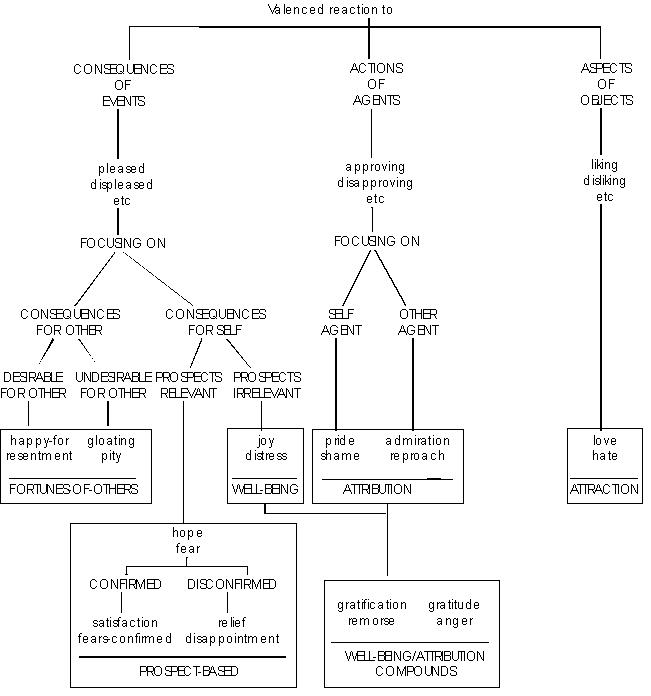
Lately I am reading a book called Cognitive Neuroscience of Emotion. I like Clore and Ortony's clever constructed cognition theory in emition, though not totally agree with it.

In an experiment, they research participant reported she's been angry with her friend because her friend stole a book at the bookstore where he worked. What's this "anger emotion" about? Their theory is its a combination of two things: one is her disaproval of the behaviour since it violates the "standard", second is that this disproval or standard violation might jepordize their friendship.

Clore and Ortony have categorized emotion priming/appraisal to two approaches: top-down and bottom-up. For buttom up process, there are three major sources: about consequence of events, actions and aspect of objects. (as below)
The top-down process involves "reinstatement" cognitive process. The reinstatement of prior appraisals from earlier situations. The examples are fearful veterans.

"Fear is a reaction to appraisals of threat, and the fact that the veteran's appraisal of the greenhouse as a threat was unconscious, was pathetically mistaken, and was based on only superficial similarities to a past emotion arose when a situation took on a particular meaning.


They also argue that there is no "precognitve process" suggested by Bargh, Greenwald and others experiments of subliminal exposure effects. Those experiments involve quickly mask the first stimuli so that subjects don't remember seeing the stimuli, however are affected by the stimuli unconsciously. Core and Ortony's arguments is there are two types of meanings of the visual stumili: the contextual (spatial-temporal) and semantic (or taxon) meaning. Therefore the subjects have recieved the semantic meaning of the stimuli but not the contextual one. This theory is backed up by the late discovery of cognition neuroscience research in memory and learning.


They also talk about the effect of the emotion without contextual association. When people lost the contextual association of emotion, they might misattribute emotions. However when the subjects became aware of these mased stimuli, the influences disappear.
As a result, mood-based feelings are easily misattributed to whatever stimulus is being processed at the thime. Hence, general moods (and moodlike conditions such as depression) are much more likely than specific emotions to result in contamination of judgement and decision.

... Freud was similarly impressed by such phenomena. He observed that unconscious stimuli with emotional potential could have wide-raging effects on dreams, symptoms, and behavior that could be neutralized simply by "making conscious" the unconscious origin of the influence.

They also suggest that express feelings to professionals, friends, strangers or simply to oneself' as in a diary, organizing one's thoughts about trauma can avoid misattribution effects. In other words, this process will strengthen the association between emotions to specific events and avoid generalization.

Tags: